Didn’t Think I Was “Mommy” Material
A long time ago, I decided I wasn’t really “Mommy” material. Kids weren’t exactly my thing—the crying, the constant need for attention, the noise. Plus, doctors had told me I had PCOS, so children were likely off the table anyway.
Then life did what it does—it happened. I met a blue-eyed country boy who asked me if I’d be willing to try. I said yes. In 1996, we stood before two priests and 250 of our closest “friends” and tied the knot.
The next eight years were full of good things: careers, a home, cars, even taking care of the neighbor’s kids when their family fell on hard times. But no second pink line ever appeared for me, the way it did so easily for friends. So, we tried fertility treatments. Lots of tears, credit card swipes, and hormone injections later—two pink lines. We were over the moon.
At 22 weeks, I declined prenatal genetic testing. “Disabilities don’t run in my family,” I told the doctor. “All will be well.”
November 4, 2004
That morning, we headed to what was supposed to be a routine appointment. The doctor was concerned—our baby wasn’t moving enough. He wanted me to come back later to be induced. I was terrified. I called my mom, desperate for a way out, sobbing about my fear.
She told me something I’ll never forget:
“You just go in there, Margaret, and do what they tell you. There are very few happy reasons to walk into a hospital. This is one of them.”
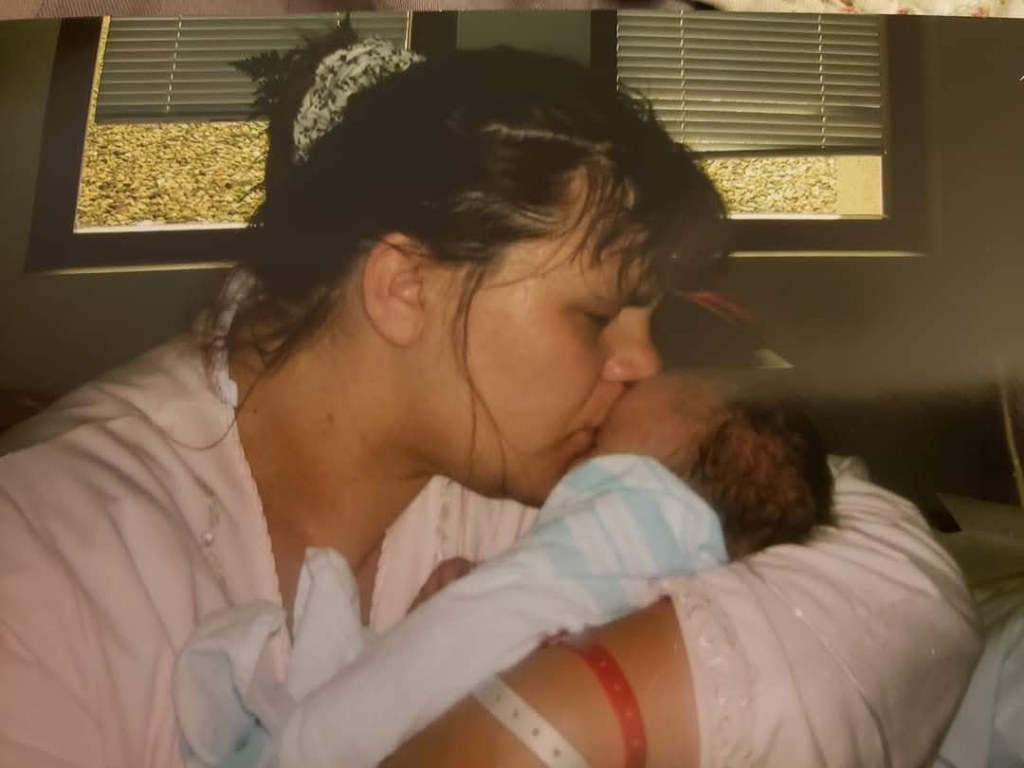
Thirty-six hours later, after a C-section, Emily arrived. But nothing was as I’d imagined. She wasn’t breathing. I hadn’t touched her. She was taken to the NICU.
Then came the words:
- She may have a hole in her heart.
- Gather your family—we’re not sure she’ll survive the transfer to Columbus.
- She probably has Down Syndrome.
I slid down the hospital wall and fainted. My husband stared into the distance. Meanwhile, a friend passed the nursery window, waving and smiling, oblivious to the devastation inside.
The next 11 days were a blur of beeping machines, bilirubin lights, and NICU routines. We left the hospital with an inconclusive genetic report—and a terrifying sense of the unknown.
Three days later, the call came:
“Mrs. Demko, your daughter tested positive for Trisomy 21.”
I screamed. I cursed the nurse. I threw the phone across the yard. Then I laid my tiny newborn in her crib, shut the door, and collapsed on the couch. I didn’t want to touch her. I didn’t want to look at her. I didn’t want a “broken” baby. Honestly, I’d never really wanted a baby at all—right? I was ready to escape, run away and never look back. I don’t know if I found it in me to actually pack a bag or not, but in my head I was halfway to the beach.
Doctors told us all the things she’d never do—before she was even three months old. I wasn’t wondering if she’d ever drive a car. I just wanted her tongue to let her eat. I just wanted her to roll over someday.
I was paralyzed by shame and fear. I worried what people would think. I even changed her name—my grandmother’s name—because I couldn’t bear the thought of associating someone so “imperfect” with someone I’d loved so perfectly. I’d never known anyone with a disability. I was lost.
The Fog
We lived through years of therapies: speech, play, feeding, occupational—you name it. I stayed angry. I was going through the motions, but I hadn’t bonded with Emily the way a mother should. I can admit that now. Back then, I was just trying to survive.
But eventually, the fog lifted. I chose to raise her as I would any child—disability or not. She went to a typical preschool and then through 12 years of fully inclusive education. She thrived.
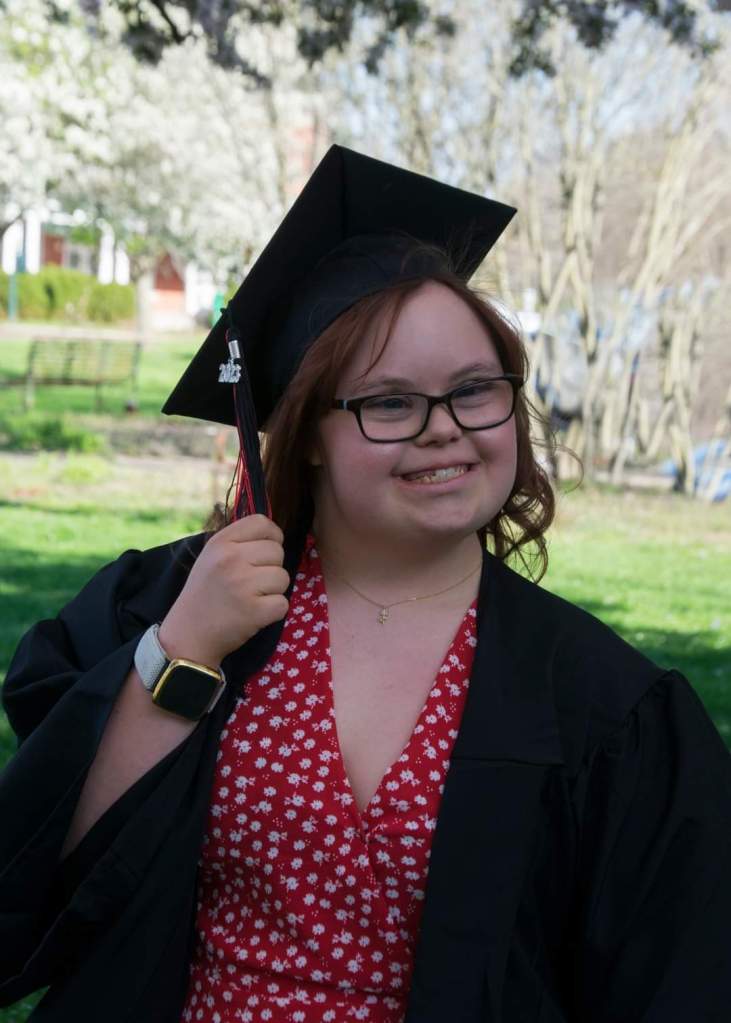
Emily became a cheerleader, joined choir, was a Jr. Fair Queen, and graduated 25th in her class—summa cum laude. Doctors called her “high-functioning.” She was articulate, healthy, social. It felt like we had made it through the hardest parts. She was doing all of the things those doctors told me she would never do. And she was excelling at them!
She even had a job lined up after graduation. I found her transportation. We were doing this.
Adulthood Arrives
The summer after graduation was a normal one: pool days, camp, part-time work at a local hot dog joint. But two years in, the cracks began to show.
She quit her job, said she hated it. Got removed from her Applebee’s shift for not being able to handle the crowds. Then came stranger signs—loud stimming, constant humming, clothes on backwards, toileting accidents, even forgetting how to shower or dress herself. She stopped smiling. Her skin broke out. She withdrew from everything. She became obsessed with time and schedules and when we would be home so she could retreat into the house and work on her crafts. Even my inviting heated pool was not enough to entice her to engage.
I hadn’t seen it coming—until I took a remote job and was home to witness the regression unravel in front of me. My once-vibrant daughter was fading before my eyes. It felt like watching the real slim shady of Trisomy 21 walk in the door and take her away.
I was overwhelmed by the sound of the humming, the decline, the stares. I found myself back in my car, packed bag and dogs ready to go, contemplating escape. Again.
The Truth About Regression
Mental health disorders and regression are common—but often undiagnosed—in adults with Down Syndrome. Emily was placed on medication for anxiety and depression, but it only added fog to fog.
The last few weeks have felt like reliving November 2004. The wound reopened. I’m terrified. I don’t know what to do, or where to go from here.
Yes, I have help. Friends. Family. Staff. But no one else lives this with me—every hour of every day, in a small house that now feels claustrophobic with the constant motion and sound.
I was arrogant to think we were past the hard part. I had fooled myself into thinking the scariest days were behind us. Now I see them for what they were—just the prologue.
Where Do We Go From Here?
….“Holland?!?” you say. “What do you mean Holland?? I signed up for Italy! I’m supposed to be in Italy. All my life I’ve dreamed of going to Italy.”
But there’s been a change in the flight plan. They’ve landed in Holland and there you must stay.…
…So you must go out and buy new guide books. And you must learn a whole new language. And you will meet a whole new group of people you would never have met.
It’s just a different place. It’s slower-paced than Italy, less flashy than Italy. But after you’ve been there for a while and you catch your breath, you look around…. and you begin to notice that Holland has windmills….and Holland has tulips. Holland even has Rembrandts.
But everyone you know is busy coming and going from Italy… and they’re all bragging about what a wonderful time they had there. And for the rest of your life, you will say “Yes, that’s where I was supposed to go. That’s what I had planned.”
And the pain of that will never, ever, ever, ever go away… because the loss of that dream is a very very significant loss.
-Emily Pearl Kingsley, excerpt from “Welcome to Holland”
I’ve reached out to new clinics. I’ve enrolled in parent trainings. I’m trying to connect with others who are navigating this confusing and isolating chapter. Will it help? I don’t know. I only know I have to try.
Emily’s adult life is here, and it’s different than I thought it would be. The poem “Welcome to Holland” was handed to me when she was born. Back then, it made me furious. Now I understand it more. But even Holland has lost its charm. I don’t really like it here anymore.
I need a new poem. A new metaphor. A new map.
If you’re reading this and walking a similar road, I hope you know you’re not alone. Whether your child has a disability or not, parenting is a journey with no fixed itinerary.
We live it one sunrise at a time. And yes, tomorrow the sun will rise in the East.
That part, at least, is still true.

 Running Toward the Hard Things..
Leave me something witty, something funny or share how this resonates with YOU