The End of the Status Quo
Most of the time, as parents, all we ever want to do is focus on the good. The strengths. The wins. Who wants to sit around and list everything their child can’t do? It feels discouraging. Deflating. And honestly, unfair. Every kid has their own mix of abilities—some are quick learners, some take their time. Some are math wizards, some are future NFL stars.
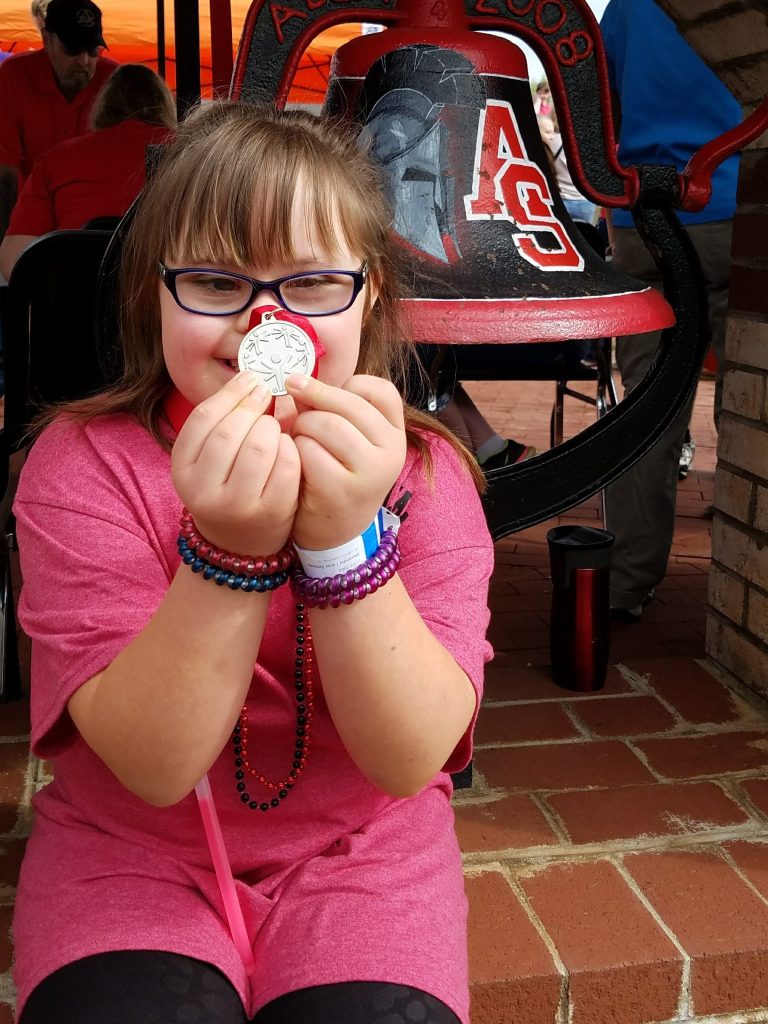
But what no parent ever does—at least not the ones who love with their whole heart—is sit down and make a list of the negatives. Can’t ride a bike. Can’t cook on a stove. Can’t speak up for themselves. For me, that list could go on. But I choose not to dwell there. Until today.
Today, if I wanted Emily to receive the services she so desperately needs, I had to say things out loud that made her seem… smaller than she is. I had to answer questions that felt like they chipped away at who she is, and even who I am as her mom.
“Can she cross the street alone with no supervision?”
No.
“Can she walk independently without tripping?”
Sometimes.
Who thinks like this? Not me. I’ve probably been hiding under the rock of Facebook, sharing the curated highlights like most people do. It’s a coping mechanism. We all show our best selves online, right? But today, I had to rip that band-aid off and bleed a little.
Thankfully, I wasn’t alone. I had the support of a kind professional from our local Board of Developmental Disabilities. He sat with me through the hard stuff—my anger, my spirals, my irrational future fears (are they really that irrational?). He even tried to make me laugh through the fog.
And then, he dropped a bomb I wasn’t expecting:
“Did you know Ohio allows a parent to be a paid caregiver?”
What? I knew what an Independent Provider was—a contractor working with individuals with DD/IDD. But me? Care for my own daughter and get paid?
It felt… wrong. Conflict of interest. Morally questionable. But it wasn’t illegal—he showed me the revised code. It was legal. And it was real.
Still, I wrestled with it. Because once you’re a parent, you’re always a parent. That doesn’t change, no matter what kind of journey you’re on. I felt like I should just grin and bear it—push through, no compensation needed. Just love.
But love doesn’t pay the bills. I had a full time job plus all of this. And love doesn’t erase the exhaustion.
Emily is an adult now—over 18 and technically her own guardian. But adulthood didn’t arrive for her the way we thought it would. In many ways, it’s been harder than elementary school ever was. And I’m tired. So tired. Mentally. Emotionally.
I don’t want to start over with new providers. New routines. New everything. I want to care for her myself, in a way only I can. So I’ve decided to accept compensation from the state—to be her caregiver, not just her mom.
And with that decision comes another—one I never thought I’d make.
After 16 years on the Board of Developmental Disabilities—10 as president—it’s time to step down. I’ve helped steer through administrative turmoil, near-strikes, levy campaigns, program closures, and tough budgets. It’s been an honor. But it’s a volunteer role. And now, my family needs me in a more immediate, day-to-day way.


All good things come to an end, don’t they?
The end of the status quo is hitting me hard. But I’m trying—really trying—to embrace what’s next. To be grateful for the past. And to find peace in the messy, imperfect present.
 Running Toward the Hard Things..
Leave me something witty, something funny or share how this resonates with YOU